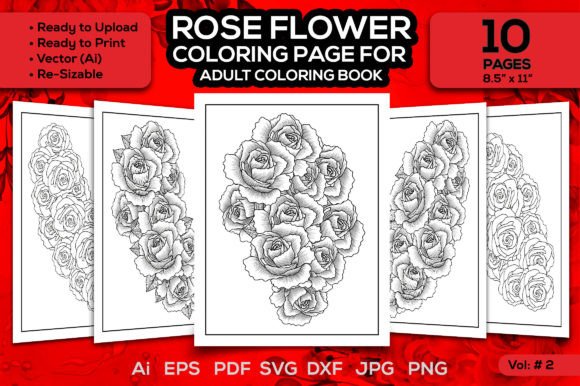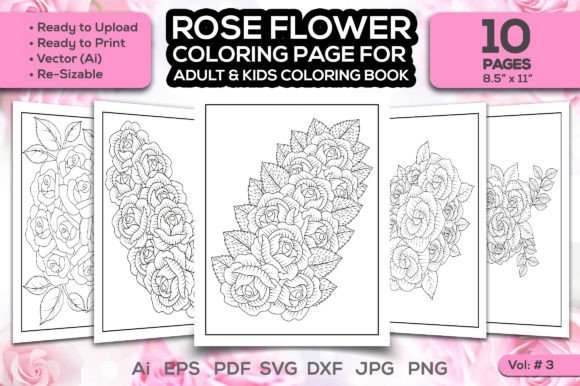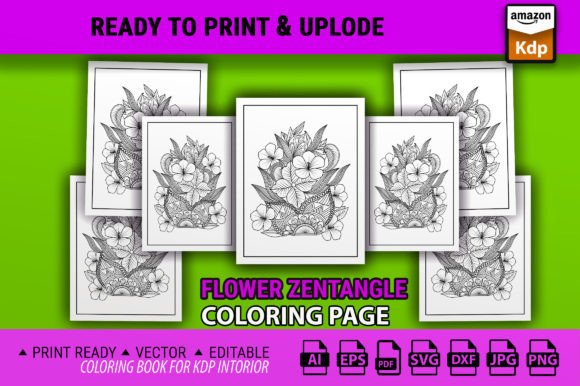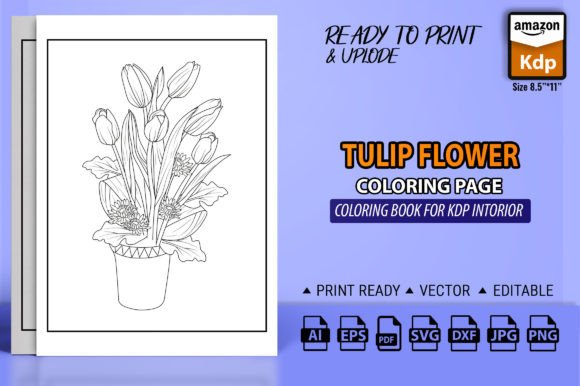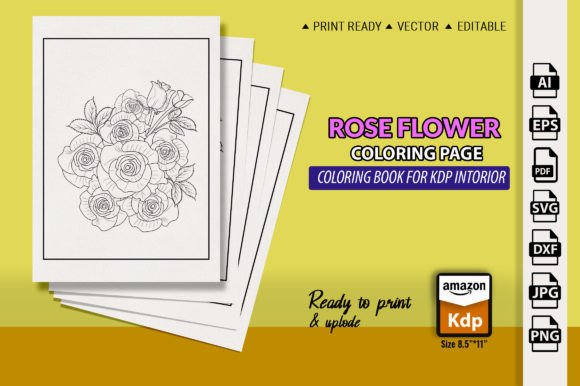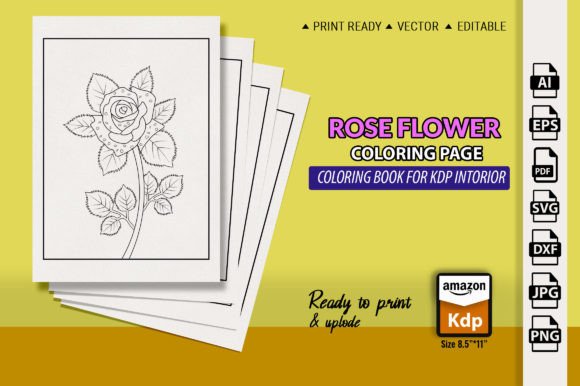
Rose Flower Coloring Page for Children Graphics
The Rose Flower Coloring Page for Children is a digital printable design that offers a soft, floral aesthetic ideal for small business branding. As a brand designer, I was immediately drawn to its delicate lines and elegant composition, which evoke a sense of calm and creativity. This graphic design asset feels well-suited for businesses that want to convey a friendly, artistic, or feminine brand personality.
First Impressions and Brand Personality
The Rose Flower Coloring Page for Children exudes a gentle, whimsical charm. Its vector-based Adobe Illustrator format ensures crisp edges and scalability, making it versatile for various applications. The 8.5×11 inch size is standard for print, which is a plus for local businesses looking to create promotional materials or product packaging with ease.
This design feels most at home in industries like boutique stores, handmade soap businesses, or children’s product brands. It can also be a great fit for a florist or a skincare brand aiming for a natural, organic look. The visual style is neither too bold nor too minimal—it strikes a balance between decorative and functional, making it adaptable for different brand identities.
Real-World Applications for Local Businesses
As a brand designer, I see the Rose Flower Coloring Page for Children being used in multiple ways for real small business projects. For instance, a bakery might use it as a background for seasonal menus or as a decorative element on packaging inserts. A coffee shop could incorporate it into social media graphics or as part of a limited-time offer flyer.
It also works well as a logo design element for businesses that want to subtly highlight nature or artistry. When used in product labels, it adds a touch of elegance without overwhelming the viewer. In packaging design, it can serve as an accent or a border, helping to differentiate a product on the shelf.
For a handmade soap business, this design could appear on hang tags or as a sticker on product boxes. It’s also useful for creating printable inserts for customer thank-you cards or promotional postcards. The versatility of this graphic design asset makes it valuable for a wide range of creative entrepreneurs and local business owners.
Supporting Business Presentation
Using the Rose Flower Coloring Page for Children can significantly enhance a business’s presentation. It helps create a stronger first impression by adding a polished, professional look to marketing visuals. When used consistently across packaging, social media, and promotional materials, it reinforces a cohesive brand identity.
This design asset also supports clearer visual hierarchy. By using it as a background or decorative element, businesses can guide the viewer’s eye toward key information such as product names, pricing, or calls to action. It can also help build customer trust by presenting a more refined and thoughtful brand image.
For a boutique store or a home decor shop, the Rose Flower Coloring Page for Children can be part of a larger editorial design strategy. It can be used in website banners, blog posts, or even in-store displays to create a unified aesthetic that resonates with the target audience.
Where the Asset Works Best
The Rose Flower Coloring Page for Children shines in applications where subtle decoration enhances the overall design. It’s ideal for product labels, especially for items like candles, soaps, or skincare products. As a hero graphic on a website banner, it can add visual interest without distracting from the main message.
It also works well as a decorative brand element in seasonal campaigns. For example, a florist might use it as part of a Valentine’s Day promotion or a springtime packaging design. In a children’s product brand, it could appear on stickers, printable inserts, or as part of a digital product like a coloring book.
When used in social media campaign graphics, the design adds a soft, inviting feel that aligns with many modern design trends. It’s also a great choice for product mockups, where it can be layered over images of actual products to showcase how they might look in real-life settings.
Where to Use It Carefully
While the Rose Flower Coloring Page for Children is a versatile design asset, there are situations where it may not be the best fit. In formal corporate branding, its decorative nature could clash with a more minimalist or professional aesthetic. Similarly, it may not work well for very small labels where intricate details could become lost.
In crowded product packaging or layouts with a lot of text, the design could compete with important information. It should also be avoided in areas where legal information or ingredient lists are required, as it may reduce readability. Low-contrast backgrounds could also make the design less visible, so it’s important to test it in different contexts.
For luxury minimalist brands, the level of detail in this design might feel excessive. If the goal is to keep the brand image clean and uncluttered, a simpler graphic would be more appropriate. Always consider the brand’s voice and audience before incorporating this design into any project.
Practical Designer Notes
Before finalizing the use of the Rose Flower Coloring Page for Children for client work or physical product sales, there are several practical steps to take. First, test it on real packaging mockups to see how it looks in different sizes and formats. Check how it appears in black and white, as some designs may lose their appeal when converted to grayscale.
Preview it on small labels to ensure that the details remain clear. Test it with your brand colors to see if it complements your existing palette. Compare it with competitor packaging to ensure it stands out while still fitting within your brand’s visual language.
Review the print quality to confirm that it looks sharp when printed. Inspect the PNG transparency to make sure there are no unwanted backgrounds. If working with SVG design, check the editability to ensure it can be modified as needed for different applications.
Test it beside different font styles—serif, sans serif, script, handwritten, and display fonts—to see how it interacts with typography. Finally, always confirm the commercial license to ensure it can be used for client projects, business branding, or physical product sales without legal issues.